Machine Integrator in DELMIA Apriso: How to Seamlessly Connect Your Machines to MES Logic
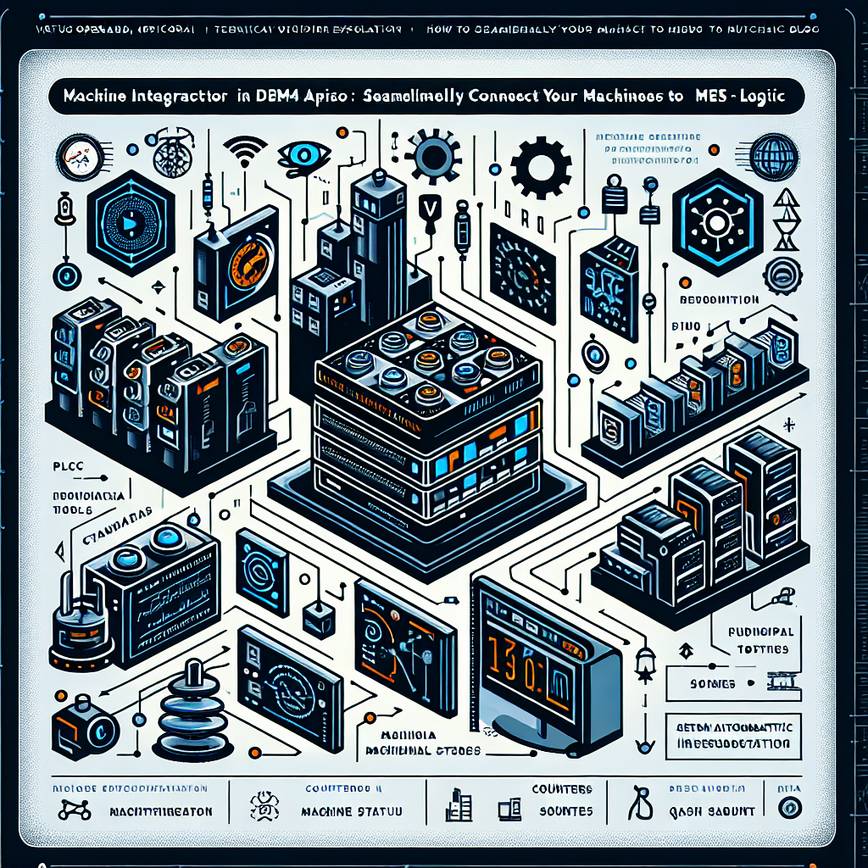
Machine Integrator in DELMIA Apriso: How to Seamlessly Connect Your Machines to MES Logic
Updated for 2025: Manufacturing operations are becoming increasingly data-driven. That’s why understanding the role of the Machine Integrator in DELMIA Apriso—and how to seamlessly connect your machines to MES logic—is vital to achieving real-time visibility and control across the shop floor. At Virtus Operandi, we specialize in unlocking the full potential of DELMIA Apriso, helping manufacturers integrate machines to MOM logic effectively.
What Is Machine Integrator (MI) in DELMIA Apriso?
Machine Integrator (MI) is a core utility within Dassault Systèmes’ DELMIA Apriso platform designed to establish real-time connections between shop floor equipment and MES/MOM systems. MI acts as a dynamic middleware layer that bridges low-level machine protocols (like PLC, OPC, and RS-232) to the high-level MOM logic routines defined in DELMIA Apriso.
Key Capabilities of Machine Integrator:
- Real-time data exchange between machines and MES workflows
- Support for various communication protocols including OPC UA, TCP/IP, and serial
- Trigger-driven architecture for efficient process control
- Highly configurable using Apriso’s native tools and scripting
Why Machine Integration Matters for MES/MOM
Factory digitalization initiatives rely on automated data collection and control. Without accurate, real-time data from machines, orchestration of MES workflows like production tracking, quality assurance, tooling, and performance metrics becomes impossible.
Integrating machines creates a seamless loop of data visibility and process control, enabling:
- Minimized manual data entry
- Real-time alerts and machine status updates
- Automated quality checks and part traceability
- Faster OEE feedback and equipment diagnostics
Architecture Overview: From Shop Floor to MES Logic
The Machine Integrator in DELMIA Apriso acts as a translator and message handler in the following architecture:
      PLC / OPC UA / RS-232
            ↓
      Machine Integrator (MI)
            ↓
      DELMIA Apriso MOM Logic (Business Processes)
This flow allows sensors, PLCs, barcode readers, scales, and other devices to communicate directly with MES workflows. As DELMIA Apriso executes its logic (e.g., Start Operation, Log Quantity, Confirm Quality), MI provides the key input or output to/from the physical world.
Typical Use Cases with Machine Integrator
Virtus Operandi has helped manufacturers implement a variety of Machine Integrator use cases. Here are the most common scenarios:
1. Machine Counters
Track quantities or cycles directly from machine sensors into DELMIA Apriso without operator intervention.
2. Real-Time Machine Status
Monitor machine states, detect downtimes, and drive automatic workflows such as maintenance triggers or downtime categorization.
3. Industrial Scales
Capture accurate weight data for quality and packaging operations at weighing stations, ensuring compliance and speed.
4. Semi-automatic Tools
Link power tools or inspection devices to MES logic to ensure standard operating procedures are followed for each serial number.
5. Quality Assurance
Feed data from measurement gauges, pressure sensors, or barcode scanners into QA workflows, ensuring product validation in real time.
High-Level Configuration Steps
Setting up MI in DELMIA Apriso generally involves the following stages:
- Define Machine Data Points: Identify inputs/outputs such as tags, bits, or sensor values to be polled.
- Create MI Listener: Configure an MI Listener (OPC, TCP/IP, etc.) that monitors or sends data.
- Map Tags to Variables: Build tag-to-variable mappings for access by DELMIA logic.
- Create Response Handlers: Design response logic or triggers based on the incoming machine signals.
- Integrate in Business Processes: Plug these variables into DELMIA Apriso workflows using Process Builder.
Virtus Operandi can assist you in planning this architecture, deploying it, and maintaining flexibility for future devices.
Comparison: Manual vs. Automated Machine Integration
| Aspect | Manual Data Entry | Machine Integrator (MI) |
|---|---|---|
| Accuracy | Prone to errors | Real-time, highly accurate |
| Speed | Slow, batch updates | Instantaneous data capture |
| Scalability | Limited by workforce | Easily scales with equipment |
| Operator Load | High | Minimal |
Best Practices for Machine Integration in DELMIA Apriso
- Standardize tag naming conventions across PLCs and devices.
- Use heartbeat mechanisms to verify communication uptime.
- Leverage modular design in MI configurations for reusability.
- Align MES logic timing with machine cycle time to avoid bottlenecks.
- Document every hardware-to-software mapping for troubleshooting.
“Partnering with Virtus Operandi gave us the seamless machine integration we needed for our digital factory roadmap. Their deep expertise in DELMIA Apriso was critical to our success.” — Automotive Tier-1 Manufacturer
Frequently Asked Questions
- What is Machine Integrator (MI) in DELMIA Apriso?
- It’s a middleware tool that connects machines using standard protocols to MES logic in DELMIA.
- How does MI interact with PLCs or OPC servers?
- MI pulls or pushes data from/to PLCs using OPC UA, TCP/IP, or serial, enabling integration with Apriso logic.
- What are common devices connected via MI?
- Scales, counters, barcode readers, pressure sensors, and machine cycle monitors.
- What protocols are supported by MI?
- OPC UA/DA, TCP/IP, RS-232, and direct driver integrations.
- How configurable is MI?
- Highly configurable—uses scripts, listeners, and event handlers customized to site needs.
- Can MI be used for quality assurance integrations?
- Yes. MI can read consistent quality data directly into MES QA workflows in DELMIA.
- How does MI impact OEE tracking?
- Real-time data from machines improves availability and performance tracking instantly.
- Can MI scale to hundreds of machines?
- Yes. MI architecture can handle complex layouts across multiple lines/sites efficiently.
- Do I need custom coding for MI?
- Custom scripts enhance MI flexibility, typically handled by Virtus Operandi consultants.
- Where can I find expert help for MI integration?
- Contact Virtus Operandi to design, implement, and maintain your DELMIA Apriso machine integration layer.
Conclusion: Partner with Virtus Operandi for Scalable Machine Integration
Integrating your shop floor equipment with the MES backbone is essential in realizing the promise of smart manufacturing. The Machine Integrator in DELMIA Apriso allows enterprises to bridge devices and processes seamlessly. With a flexible architecture, robust protocol support, and tight integration with Apriso’s MOM logic, it’s a game-changer for plants aiming for real-time operations.
Virtus Operandi has extensive experience designing, deploying, and optimizing MI configurations for complex manufacturing environments. Whether you are starting an Industry 4.0 initiative or expanding your existing infrastructure, we are your trusted DELMIA Apriso partner.
Ready to transform your production floor? Talk to Virtus Operandi now to unlock machine-to-MES connectivity.