How AI for Manufacturing is Revolutionizing the Factory Floor in 2025
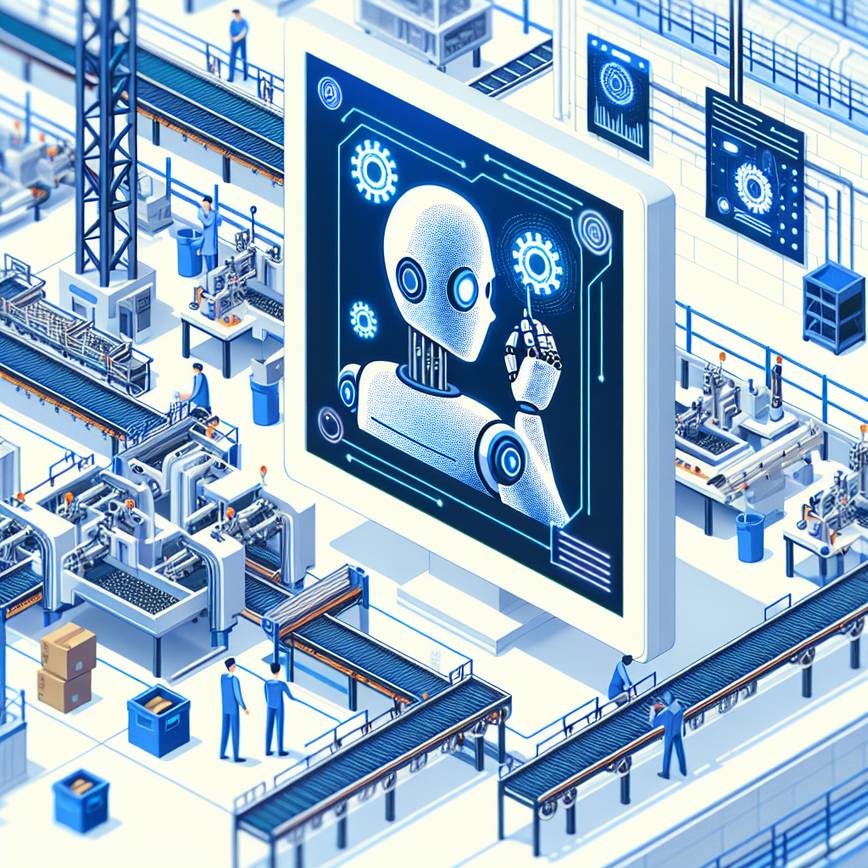
How AI for Manufacturing is Revolutionizing the Factory Floor in 2025
Updated for 2025: The manufacturing industry is undergoing one of its most profound transformations in decades, with AI for manufacturing leading the charge. From predictive maintenance to real-time quality control, artificial intelligence is unlocking unprecedented efficiency, safety, and adaptability across production environments.
What Is AI for Manufacturing?
AI for manufacturing refers to the integration of artificial intelligence technologies—like machine learning, computer vision, and industrial automation—into manufacturing operations. These tools help companies make smarter decisions, reduce waste, and drive continuous improvements.
Key AI Technologies Used in Manufacturing
- Predictive Maintenance: Sensors and algorithms forecast equipment failures before they happen.
- Industrial Automation: Robots and autonomous systems streamline repetitive or hazardous tasks.
- Machine Learning: AI learns from historical data to optimize everything from supply chain logistics to energy use.
- Computer Vision: Cameras analyze production lines for quality control and safety monitoring.
- Digital Twins: Virtual models simulate physical systems for testing and optimization.
Benefits of Implementing AI in Manufacturing
Integrating AI can transform your operation’s bottom line and day-to-day processes. Below are the most impactful benefits:
1. Cost Reduction
With AI-enabled predictive maintenance, facilities reduce unplanned downtime and extend equipment lifespan. This can lead to significant financial savings.
2. Improved Product Quality
AI systems can detect inconsistencies during production in real-time, decreasing defect rates and increasing customer satisfaction.
3. Enhanced Supply Chain Optimization
AI algorithms analyze supply chain data to forecast demand, streamline inventory, and reduce lead times.
4. Increased Worker Safety
Automation and AI-powered vision systems help identify safety hazards and reduce human exposure to dangerous tasks.
Pros and Cons of AI for Manufacturing
| Pros | Cons |
|---|---|
| Boosts production efficiency | Requires high upfront investment |
| Lowers operational costs over time | Skills gap in workforce training |
| Enhances product quality and consistency | Integration with legacy systems |
| Improves safety with automation | Potential job displacement concerns |
Real-World Examples of AI in Manufacturing
Many companies are already successfully using AI to gain competitive advantages. For instance:
- Siemens: Uses AI-driven digital twins to optimize turbine manufacturing.
- General Motors: Employs computer vision for real-time quality assurance in assembly lines.
- BASF: Applies machine learning for predictive maintenance in chemical production.
Testimonial
“After integrating AI for predictive maintenance, we cut downtime by 27% in just six months. It’s transformed our operations” – Manufacturing Director, Mid-size Automotive Company.
Challenges in AI Adoption
Despite its benefits, AI implementation in manufacturing isn’t free from hurdles:
- High Initial Costs – Implementing data infrastructures and AI systems can be expensive.
- Data Silos – Many manufacturers struggle to centralize and clean their data for AI use.
- Workforce Readiness – Workers need training to collaborate effectively with AI systems.
- Cybersecurity – Integrating AI increases the digital attack surface.
How to Start Integrating AI into Your Manufacturing Process
Modernizing your facility starts with a sound strategy. Here are the steps manufacturers commonly follow:
- Assess Your Needs: Define business goals that AI can support (e.g., reducing downtime).
- Data Collection: Gather relevant process, machine, and quality data.
- Pilot Projects: Run a small-scale AI initiative to test viability.
- Partner with AI Experts: Collaborate with firms experienced in industrial AI deployment.
- Scale Gradually: Expand AI solutions after measuring ROI from pilot projects.
Contact Virtus Operandi today for an AI maturity assessment and roadmap customized to your business.
The Future of AI in Manufacturing
AI trends shaping the next evolution in manufacturing include:
- Autonomous Factories: Fully AI-managed factories with minimal human intervention.
- Human-AI Collaboration: Cobots (collaborative robots) working alongside human workers.
- AI-Powered Supply Chains: Real-time visibility and optimization from source to delivery.
Reports from Industry 4.0 experts and McKinsey & Company predict AI will be a core pillar in smart factories worldwide within this decade.
FAQ: AI for Manufacturing
- What is AI for manufacturing?
- AI for manufacturing refers to applying artificial intelligence to improve industrial processes and automation.
- How does predictive maintenance work in manufacturing?
- Sensors detect equipment anomalies and use machine learning algorithms to predict failures before they occur.
- What are common challenges of AI in factories?
- High costs, data quality issues, cybersecurity threats, and skill gaps are common obstacles.
- Can AI improve product quality?
- Yes, AI improves quality through real-time monitoring, defect detection, and pattern recognition.
- Is AI replacing human workers in manufacturing?
- Not entirely. AI is transforming tasks, but most systems still require human oversight and collaboration.
- What industries benefit most from AI in manufacturing?
- Automotive, electronics, aerospace, pharmaceuticals, and consumer goods see the most gains from AI adoption.
- How long does it take to see ROI in AI manufacturing projects?
- ROI can be observed within 6–18 months, depending on use case and project scope.
- What is a digital twin in manufacturing?
- A digital twin is a virtual model that simulates a physical factory or machine for real-time optimization.
- Is AI suitable for small or mid-size manufacturers?
- Yes, scalable AI solutions and cloud platforms now make adoption viable for smaller operations too.
- Where can I learn more about AI for manufacturing?
- You can explore resources on Virtus Operandi’s website and sites like Wikipedia or McKinsey Insights.
Conclusion: Why AI for Manufacturing Is the Future
AI for manufacturing is no longer a futuristic concept—it’s a current-day imperative. The ability to predict equipment failure, optimize workflows, enhance quality, and boost supply chain resilience is too impactful to ignore.
As challenges like data management and workforce adjustment are overcome, AI will become central to smart factories around the globe.
Interested in harnessing the power of AI to gain a competitive edge in 2025 and beyond? Reach out to Virtus Operandi today.